

This Is How To Layer Your Skincare Correctly
You’ve carefully curated your skincare shelf - targeted serums, hardworking treatments, and a moisturiser you swear by - all chosen to support your skin’s unique needs. But once you have the right products, the next question is: what order do they actually go in?
When it comes to how to layer skincare, there are a few golden rules to follow. But there are also some important exceptions that can help you get even more from your formulas. Consider this as your expert-led guide to layering like a pro.
Key Takeaways
• Layer from thinnest to thickest
• Apply water-based before oil-based
• Ensure you’re mixing the right ingredients
• Allow time for each layer to sink in
How To Layer Your Skincare: The Basics
Step 1: Cleanser
Every effective skincare routine begins with a cleanser, and choosing the right formula for you is paramount.
If you’re wearing makeup, opt for an oil or balm cleanser for your first cleanse, such as Medik8’s Lipid-Balance Cleansing Oil or Elemis’ Pro-Collagen Cleansing Balm. This helps melt away makeup, SPF and excess oil without stripping your skin.
Next, whilst your skin is still damp, massage a water-based cleanser, like Dr Sam's Flawless Cleanser, into your skin to remove any remaining makeup or impurities. This second cleanse ensures you’re starting with a truly clean canvas, allowing everything that follows to absorb properly.
Step 2: Serums & Treatments
As a general rule, serums should be applied from thinnest to thickest, starting with water-based serums followed by oil-based serums. Thinner serums can’t penetrate through the barrier of thicker serums, so applying them in this order means you can get the most out of each formula. You can easily determine the consistency of your serum by applying a bit to the back of your hand and massaging it in.
If both consistencies are the same, think about which ingredient you’d like your skin to benefit from most. If you’re choosing between hyaluronic acid or niacinamide, and your main concern is uneven skin tone, go for niacinamide first.
Alternatively, you can also use this rule to your advantage. If you’re just introducing an ingredient and you aren’t sure how your skin will react, you might apply it after your other tried-and-tested serums to ‘sandwich’ the active and reduce penetration.
Step 3: Moisturiser
Next, your moisturiser. This step helps lock in moisture and prevent transepidermal water loss.
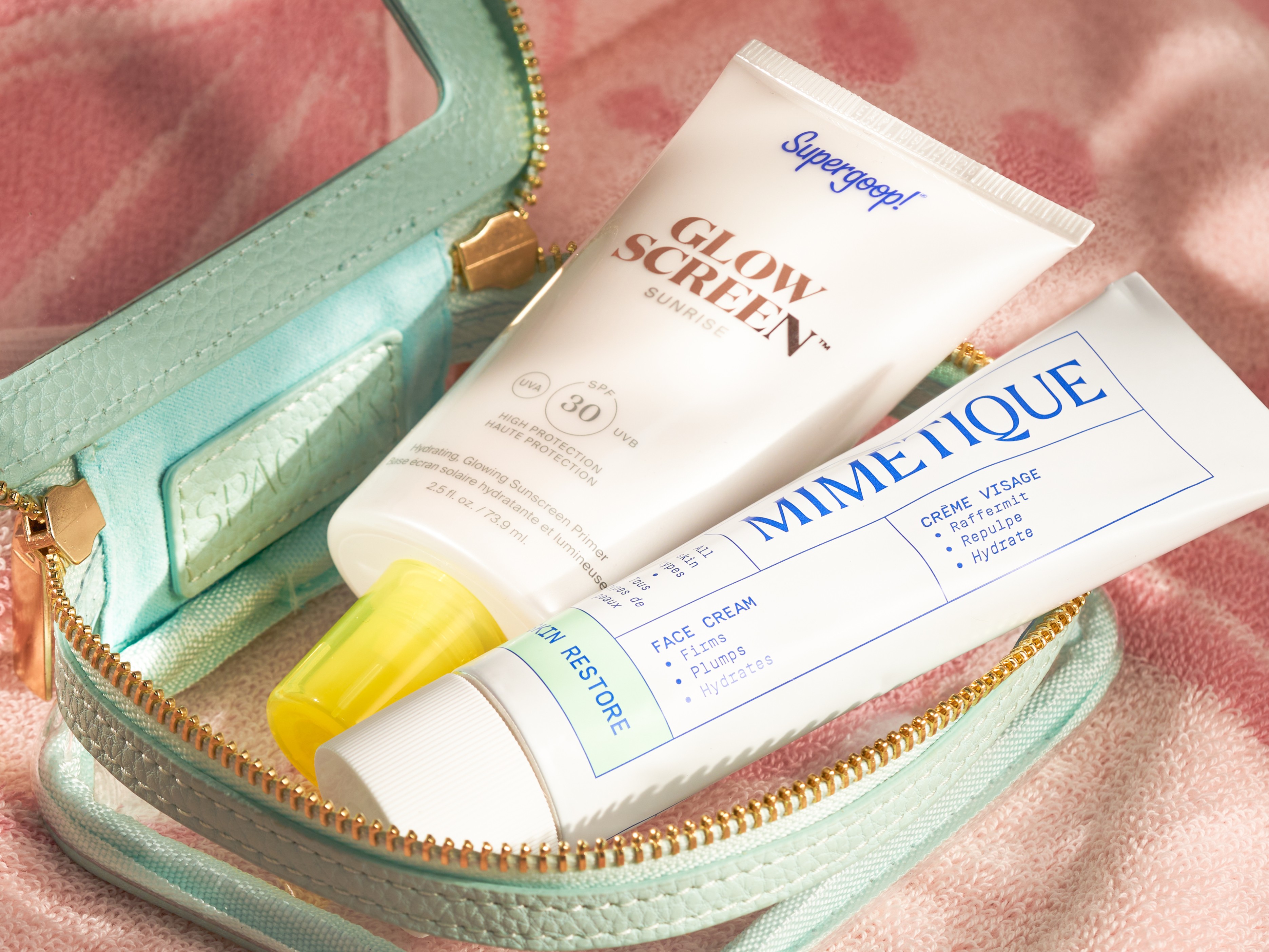
After applying your serums, smooth your moisturiser over the skin to seal in hydration and support your skin barrier. Even if you’re oily or breakout-prone, this step is essential - Mimetique's Skin Restore Crème Visage is a great non-greasy option.
Well-hydrated skin is healthier, more resilient and better able to tolerate active ingredients.
Step 4: SPF
In the morning, always follow with SPF as the final step in your routine. Think of it as the protective shield that keeps your skin safe, happy and healthy.
One of our favourite suncare brands is Supergoop - its formulas layer beautifully with other skincare and don’t cause pilling. Alternatively, try Ultra Violette for a range of finishes and textures.
This is where you can add extras like a hydrating lip balm or an SPF lip balm for particularly sunny days.
The Exceptions
Understanding how to layer skincare isn’t just about texture – it’s also about compatibility. Some active ingredients simply don’t play well together.
Vitamin A + AHA, BHA and PHA
Vitamin A is a key ingredient for skin renewal, but using it alongside exfoliating acids can lead to over-exfoliation and skin irritation.
“Vitamin A (retinol or retinal) should not be used alongside exfoliating acids such as AHAs, BHAs or PHAs, as this can lead to over-exfoliation and compromise the skin barrier.
Vitamin C + Retinol
“Another duo to avoid layering is vitamin C and retinol. These ingredients perform best in different pH environments and applying them together can increase the likelihood of irritation and reduce overall efficacy. Both are powerful ingredients for brightening and age-defying results.”
The best way to reap the benefits of each ingredient is to apply vitamin C in the morning and vitamin A at night.
However, it’s also important to consider whether each step of your skincare routine is truly valuable for your skin. If your main skin concern is acne and you’d like to prioritise retinol, consider removing your vitamin C serum for now. Streamlining can often lead to better results.
Which Ingredients Do Pair Well Together?
On the contrary, many ingredients work in harmony and can actually boost each other’s effectiveness, says Dan.
Vitamin C + Sunscreen
“Applying vitamin C with sunscreen in the morning enhances antioxidant protection against environmental stressors.”
Vitamin A + Hyaluronic Acid
“Using vitamin A at night with a hyaluronic acid serum helps maintain hydration and skin comfort. Barrier-supporting ingredients such as ceramides, usually found in rich moisturisers, also work beautifully to improve tolerance and maintain skin resilience.”
Niacinamide + Just About Everything
“Niacinamide is highly versatile and works well with most active ingredients, day and night, including vitamin C, vitamin A and exfoliating acids, as it helps calm the complexion and strengthen the skin barrier over time.”
How To Prevent Pilling
“Pilling often happens because of your layering technique or from applying too much product. To prevent it, apply products from the thinnest to the thickest consistency, use the recommended amounts, and allow each layer to fully absorb before moving onto the next,” says Dan.
Dan also explains that making smarter choices - such as opting for one serum that contains multiple ingredients - is an easy way to reduce the number of layers in your routine: “Keep your routine streamlined by focusing on multi-ingredient formulas or targeted ingredients that fit your skin goals.”
The Bottom Line
Once you understand the principles – thinnest to thickest, water-based before oil-based, and pairing the right ingredients – you can take all of the fear and guesswork out of layering your skincare.
